
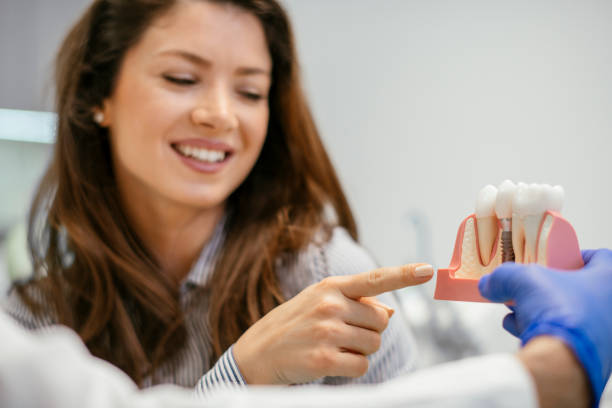
Some failing dental implants can be saved. The odds are best when the implant is still stable and the underlying problem can be treated. Success depends on the diagnosis, including the cause and how much supporting bone has been lost. Implant stability and the health of the surrounding tissue also shape the outlook. An implant that has lost osseointegration or suffered severe structural damage may need to be removed.
Most problems fall into one of three situations. A stable implant may have a treatable gum or crown problem. A stable implant may have peri-implantitis with loss of supporting bone. Or the implant may have lost integration, fractured, or developed a poor long-term outlook. Each situation leads to a different treatment path.
For patients with dental implants in New London, CT, implant salvage starts with an accurate diagnosis. This guide explains how periodontists decide whether a failing implant can be treated or should be replaced.
Key Takeaways
- Some failing dental implants can be treated without removing the implant fixture.
- A stable implant with a manageable complication may have a different prognosis from a truly mobile implant.
- Peri-implantitis and bone loss do not automatically mean removal, but they require careful evaluation.
- Implant salvage may involve disease control, surgery, restoration changes, or ongoing maintenance.
- Removal may be recommended when keeping the implant is unlikely to provide a predictable outcome.
What Does It Mean When a Dental Implant Is Failing?
“Failing dental implant” is a patient-friendly phrase rather than a diagnosis. It can describe gum inflammation, bone loss, a loose crown, a broken screw, or an implant that never fused with the jaw. Each has a different cause and outlook.
A Failing Dental Implant Is Not Always a Failed Implant
A failing dental implant, sometimes called a compromised implant, is still connected to the bone even though disease or a mechanical problem threatens it. The implant’s prognosis depends on whether that problem can be controlled.
Implant failure is different. A failed implant has lost osseointegration, the direct bond between the implant and the bone. It may also be damaged beyond repair or no longer possible to maintain predictably. Implant salvage is generally realistic only while the bond with the bone remains.
Biological Implant Complications vs. Mechanical Implant Problems
Biological complications involve the living tissues around the implant. Two main conditions fall into this group. Peri-implant mucositis is inflammation limited to the soft tissue. Peri-implantitis involves inflammation with progressive loss of supporting bone. Unsuccessful osseointegration is also a biological complication.
Mechanical problems involve the implant’s components and restoration. Examples include loose screws, fractured crowns, abutment problems, and an unstable prosthesis. Less often, the implant fixture itself fractures. A loose crown can often be repaired while the implant underneath stays healthy and integrated.
Early Implant Failure vs. Late Implant Failure
Early failure happens during healing, before the implant fully integrates with the bone. This is often described as failed osseointegration, and salvage is generally unlikely because the bond never formed.
Late implant failure is the loss of an implant after it has been functioning. It often follows a later complication, such as peri-implant disease or a mechanical problem. While the implant is still integrated, that complication may be treatable. Most salvage decisions happen at this stage, before a late complication becomes a late failure.
When Can a Failing Dental Implant Be Saved?
Salvage is most realistic when three conditions are met. The implant remains integrated with the bone, and the underlying problem is treatable. It can also be kept healthy and functional over the long term.
When the Implant Is Stable, but the Surrounding Gums Are Inflamed
Peri-implant mucositis causes redness, swelling, and bleeding in the gum tissue around the implant. The inflammation is limited to the soft tissue, without the progressive bone loss that defines peri-implantitis. Professional cleaning and better plaque control can often reverse it. Some cases need more, such as reshaping a crown that traps plaque. Early care matters because untreated mucositis can progress to peri-implantitis.
When Peri-Implantitis Has Not Made the Implant Unsalvageable
Some implants with peri-implantitis can be retained after appropriate treatment. The outcome depends on factors such as these.
- The shape, severity, and pattern of the bone loss
- Whether the implant surface can be reached for cleaning
- The implant’s position and how easily the crown can be cleaned
- How well the disease responds to treatment
- Risk factors such as smoking or diabetes
- Whether the implant can be maintained afterward
No single percentage of bone loss automatically means an implant must come out.
When the Problem Involves a Loose Crown, Screw, or Abutment
A loose restoration is different from a loose implant fixture. When the crown, abutment, or screw is moving, the implant itself may be fully stable. Depending on the findings, a clinician may retighten the screw, replace a worn component, or remake the crown. These repairs can often be completed without disturbing the implant. They require specific instruments and should always be handled in the dental office.
When the Cause of the Problem Can Be Corrected
Prognosis improves when the clinician can identify what started the problem. Common contributing causes include excess cement left under the gum, a crown shape that traps plaque, or a restoration that overloads the implant. Removing the cause gives treatment a better chance of controlling the disease, though it does not guarantee successful salvage.
What Determines Whether a Dental Implant Can Be Saved?
Every salvage decision rests on several factors considered together. No single finding tells the whole story.
Whether the Implant Is Still Firmly Integrated With the Jawbone
An osseointegrated implant has a direct biological connection with the surrounding bone. This implant-bone interface gives the implant its stability and allows it to carry bite forces.
True clinical mobility of the implant fixture is a major concern because it can indicate that this bond has been lost. Lost integration cannot be predictably restored around the same implant.
A loose crown or screw is a separate issue. Movement in these parts does not mean the implant itself has lost stability.
How Much Supporting Bone Remains Around the Implant
Supporting bone anchors the implant and helps it withstand chewing forces over time. As bone loss around a dental implant progresses, less of the implant stays anchored. The pocket around it also deepens, which makes the area harder to clean and inflammation more likely to return.
There is no universal cutoff. Two implants with similar bone loss can have very different outlooks.
The Shape and Location of the Peri-Implant Bone Defect
Both the shape and the amount of bone loss affect the prognosis. Periodontists describe defects in a few general patterns.
- Contained intrabony defects are crater-like and surrounded by bone walls. Those walls help hold graft material in place, so some of these defects may suit regenerative treatment.
- Horizontal bone loss lowers the bone evenly around the implant. With no walls to support a graft, rebuilding bone is more difficult.
- Combined defects mix both patterns and need individual assessment.
- Exposed implant surfaces sit above the bone line, where they collect plaque and can be difficult to decontaminate.
Where the defect sits also matters, because some areas are harder to reach during treatment. A favorable defect shape can open more options. It does not promise that bone will regrow.
Whether Peri-Implant Inflammation Can Be Controlled
Bleeding on probing, suppuration (pus), and swelling signal active inflammation. Plaque biofilm on the implant surface drives that inflammation.
The key question is how the tissue responds to treatment. Inflammation that settles after care supports retention. Inflammation that persists suggests a less favorable prognosis.
Symptoms alone cannot establish how severe the disease is. Some implants with significant bone loss cause little discomfort.
Implant Position and Access for Cleaning
An implant placed too close to a neighboring tooth, too deep, or at a steep angle can be hard to clean. Crowns with bulky contours or hard-to-reach edges create the same problem. When plaque cannot be removed reliably, inflammation tends to return, and long-term maintenance becomes more challenging.
For this reason, implant positioning and restoration design are recognized risk factors for peri-implant disease. Planning tools such as guided implant surgery help clinicians position implants with long-term cleaning in mind.
The Condition of the Implant Fixture and Prosthetic Components
A structurally intact fixture can often support a new crown, abutment, or screw if those parts fail. A fixture that is fractured or otherwise irreparably damaged is a different situation. In that case, the implant usually cannot be repaired, and removal is typically recommended.
Smoking, Periodontitis History, and Systemic Risk Factors
Smoking, a history of periodontitis, and poorly controlled diabetes raise the risk of peri-implant disease and recurrence. Smoking and uncontrolled blood sugar can also impair healing after treatment. None of these factors automatically rules out salvage, but each shapes the treatment plan and follow-up schedule.
Whether Long-Term Maintenance Is Realistic
Saving an implant means keeping it healthy for years, well beyond the first months after treatment. The clinician considers whether you can clean around it, attend follow-up visits, and keep inflammation controlled. If long-term upkeep is not realistic, a different plan may serve you better.
Can an Infected Dental Implant Be Saved Without Removing It?
Sometimes. The answer depends on the diagnosis and how severe the infection has become. The key distinction is whether it is limited to the gums or has reached the supporting bone.
Peri-Implant Mucositis May Be Managed Without Implant Removal
When peri-implant inflammation stays in the soft tissue, the bone supporting the implant is still intact. Nonsurgical cleaning and risk factor control can often resolve this inflammation. Once the disease involves supporting bone loss, it becomes peri-implantitis and treatment grows more complex. Mucositis is the most favorable stage for an infected dental implant.
Peri-Implantitis May Require More Advanced Treatment
Once bone loss begins, implant infection treatment usually starts with nonsurgical therapy and reassessment. If inflammation or deep pockets persist, surgery may be needed to reach and clean the implant surface. Our guide to peri-implantitis treatment options explains each approach in detail.
When Infection and Bone Destruction Make Implant Retention Less Predictable
Some situations make implant salvage less likely to succeed.
- Severe bone loss may leave too little support for the implant to stay stable.
- Poor access to the implant surface can prevent thorough cleaning, even during surgery.
- An unfavorable implant position can make the area impossible to keep clean afterward.
- Disease that keeps progressing despite treatment shows that the infection is not being controlled.
In these cases, removal may be the more predictable recommendation.
Why Antibiotics Alone May Not Solve an Implant Infection
Plaque biofilm on the implant surface drives peri-implant infections. This biofilm shields bacteria from medication. Antibiotics may play a supporting role, but they cannot replace mechanical or surgical cleaning of the contaminated surface. The underlying cause, such as a crown that traps plaque, also needs to be corrected.
Can a Dental Implant With Bone Loss Still Be Saved?
Bone loss does not automatically make salvage impossible. Its pattern and severity, along with implant stability, determine what is reasonable.
Why Bone Loss Changes the Implant’s Prognosis
Bone loss affects an implant in two ways. It reduces the anchorage that keeps the implant stable under chewing forces. It also leaves a deeper pocket that plaque can reach but home cleaning cannot.
That combination can create a cycle in which inflammation causes more bone loss, and more bone loss makes cleaning harder. The more support that remains, the better the chance of breaking that cycle.
When Bone Regeneration Around an Implant May Be Considered
Regenerative peri-implant surgery attempts to rebuild some lost bone. The periodontist cleans the implant surface, places graft material, and often adds a barrier membrane. This approach is known as guided bone regeneration. Whether you are a candidate depends on defect shape, implant condition, and disease control.
Why Not All Peri-Implant Bone Defects Can Be Rebuilt Predictably
Once part of the implant surface is exposed above the bone and contaminated, new bone forms on it less predictably than during original healing. Wide horizontal defects lack walls to hold a graft. Implants positioned too far toward the cheek or lip may have little bone to build on. Bone grafting can help in selected cases, but it cannot reliably restore all lost support or reverse a failed implant.
What Treatments Can Help Save a Failing Dental Implant?
A recent joint consensus from the American Academy of Periodontology and the Academy of Osseointegration describes a stepwise approach. Care begins with nonsurgical therapy and moves to surgery when needed. These treatments serve different purposes and are not interchangeable.
Professional Cleaning and Non-Surgical Peri-Implant Therapy
Specialized instruments remove plaque biofilm and hardened deposits from the implant and crown. Your periodontist adjusts your home care routine and reassesses the tissue after healing. This may be enough for mucositis and is often the first step for peri-implantitis.
Surgical Access and Implant Surface Decontamination
When nonsurgical care does not control the disease, surgery may be the next step. The periodontist lifts the gum to reach the implant surface, cleans it directly, and removes inflamed tissue. Several decontamination methods exist, and research has not shown one to be best for every case.
Regenerative Surgery for Selected Bone Defects
For contained defects, graft materials and barrier membranes may help rebuild part of the lost bone. Results depend heavily on case selection.
Resective Surgery When Regeneration Is Not the Main Goal
When a defect is unlikely to respond to regeneration, such as horizontal bone loss, surgery may focus on reshaping the bone and gum tissue. The goal is better access, shallower pockets, and an implant that is easier to keep clean.
Correcting Implant Crown or Abutment Problems
When the restoration contributes to the problem, the periodontist and restoring dentist may reshape or remake the crown. They can also replace worn or damaged components. These changes make the implant easier to clean and reduce mechanical stress.
Managing Risk Factors and Establishing a Maintenance Plan
After treatment, the goal is to keep inflammation controlled. Uncontrolled risk factors can reactivate the disease, so quitting smoking and improving blood sugar control both matter. Regular maintenance visits help catch any return of inflammation early.
When Is Removing a Failing Dental Implant the Better Option?
Removal is sometimes the most predictable path toward a healthy, functional mouth. Choosing it reflects sound clinical judgment. It is a planned treatment step that often protects the bone and keeps future replacement options open.
The table below summarizes which situations may be treatable and which more often lead to removal. It is an educational guide and cannot replace a clinical examination.
| Clinical situation | Is salvage potentially possible? | Key consideration |
| Inflamed soft tissue without progressive bone loss | Often treatable | Disease control and maintenance |
| Stable implant with peri-implantitis | Sometimes | Defect pattern, severity, access, and response |
| Stable implant with limited bone loss | Sometimes | Remaining support and prognosis |
| Loose implant crown or screw | Often repairable | Whether the fixture remains integrated |
| Truly mobile implant fixture | Generally poor salvage outlook | Possible loss of osseointegration |
| Fractured implant body | Usually requires removal | Structural damage |
| Severe progressive bone loss | Case-dependent, potentially poor | Predictability of treatment |
| Recurrent disease after previous treatment | Case-dependent | Cause, progression, and maintainability |
When the Implant Has Lost Osseointegration and Is Truly Mobile
A fixture that moves in the bone has lost its biological bond. Every movement disrupts the bone cells that would need to form a new connection. The implant surface has also usually been contaminated. For these reasons, cleaning or grafting alone generally cannot restore that bond predictably.
When Severe Bone Loss Leaves an Unfavorable Prognosis
Extensive, ongoing, or unfavorably shaped bone loss may leave too little support for treatment to succeed predictably.
When the Implant Fixture Is Fractured
A broken implant body cannot be repaired. A broken crown, screw, or abutment can usually be replaced.
When Implant Position Prevents Predictable Treatment or Maintenance
Some implants sit where instruments cannot reach the affected surface. Others are angled or placed so deep that a cleanable, functional crown is not possible. Keeping these implants may mean ongoing inflammation with little chance of lasting improvement.
When Previous Treatment Has Not Controlled the Disease
Peri-implantitis may persist despite treatment or return after a period of control. Each active period can cost more supporting bone. Removing the implant at the right time may preserve the bone needed for a future replacement.
How Does a Periodontist Decide Between Implant Salvage and Removal?
A periodontist specializes in the gums and bone that support teeth and implants. That focus makes periodontists well suited to weigh salvage against removal. The decision combines your history, clinical findings, and imaging. For patients seeing a periodontist in New London, CT, Shoreline Periodontics also evaluates implants placed by other providers as a second opinion.
Reviewing Implant History, Symptoms, and Previous Treatment
Expect questions about when the implant was placed, when symptoms began, and any past peri-implantitis treatment. Your restorative, medical, and periodontal histories also matter. The timeline helps separate a healing problem from a complication that developed years later.
Checking Implant Mobility and Prosthetic Components
The first task is identifying what is actually moving. The periodontist checks the crown, abutment, and screw separately from the implant body. This step shapes the entire plan. A loose component is often repairable, while a mobile fixture usually points toward removal.
Measuring Peri-Implant Probing Depths and Inflammation
Gentle probing measures pocket depth and checks for bleeding or suppuration. These readings mean the most when compared with earlier measurements, since change over time shows whether the disease is progressing.
Evaluating Bone Levels With Dental Imaging
Dental radiographs show bone levels and how they have changed. A CBCT scan may be used when three-dimensional detail is needed. Imaging guides the decision but cannot settle it alone.
Assessing Implant Position, Restoration Design, and Cleansability
The implant’s angle and depth, the crown shape, and how easily you can clean around it often determine which treatments are realistic. A crown that can be removed may allow better access for treatment. A poorly positioned implant may favor resective surgery or removal over regeneration.
Discussing Prognosis, Alternatives, and Long-Term Maintenance
A sound decision weighs the likelihood of disease control, expected function, and future maintenance. The time, cost, and number of procedures involved also count. So do your preferences, the consequences of delaying removal, and whether replacement is feasible. Your periodontist should walk you through each option so the final choice is one you understand and agree with.
Can a Failing Dental Implant Be Saved if It Feels Loose?
It depends on what is moving. A loose crown or screw is often repairable. A loose implant fixture is more serious.
A Loose Implant Crown Is Different From a Loose Implant Fixture
The crown sits on an abutment attached to the implant with a small screw. If that screw loosens, the crown may wiggle while the implant stays firmly in the bone. A loose fixture is different because the implant itself moves within the jaw. If your dental implant feels loose when you chew, any of these parts could be the cause. You usually cannot tell which one by feel alone.
Why True Implant Mobility Is a More Serious Finding
When the implant body itself moves, it can indicate lost osseointegration and limited salvage options. A loose screw can often be retightened. A mobile fixture cannot be fixed that way.
Why Patients Should Not Try to Tighten or Test a Loose Implant
Do not try to tighten or adjust the crown yourself. Avoid wiggling the implant or chewing on that side until it has been examined. Repeated movement can damage components or irritate the surrounding tissue. Schedule a professional evaluation promptly.
What Happens if a Failing Dental Implant Is Left Untreated?
Many implant problems progress gradually, often without much discomfort.
Peri-Implant Inflammation May Progress
Untreated mucositis can develop into peri-implantitis. Existing peri-implantitis may continue to affect the surrounding gum and bone.
Supporting Bone Loss May Become More Extensive
Advancing bone loss can create wider defects that are harder to treat. These defects lose the bone walls that help hold grafts and leave less bone for a future implant.
Mechanical Problems Can Affect the Restoration
A loose screw flexes with each bite and may eventually fracture. Uneven bite forces can also damage the crown or abutment.
Delaying Evaluation Can Reduce Future Treatment Options
Earlier diagnosis often preserves more choices, though it cannot guarantee the implant will be saved.
Can a Failing Dental Implant Be Saved More Than Once?
Sometimes, but each round of treatment calls for a fresh look at the prognosis.
Recurrent Peri-Implantitis Can Change the Long-Term Prognosis
When peri-implantitis returns, the periodontist reassesses its severity, what is driving it, and how the implant responded before. Recurrence often suggests that a contributing factor remains uncontrolled. Unless that factor can be corrected, the long-term outlook may be less favorable.
Repeated Treatment Does Not Guarantee Long-Term Implant Retention
Each procedure adds time, cost, and recovery, and may leave less bone to work with.
When Retreatment Should Be Compared With Implant Removal
At some point, removal and replacement may be more predictable than another round of treatment. You and your periodontist should weigh that choice together, based on an honest view of the implant’s outlook.
What Happens if a Dental Implant Cannot Be Saved?
Losing an implant still leaves options for replacing the tooth.
Removing the Implant and Evaluating the Site
The periodontist removes the implant and assesses the remaining bone and gum tissue.
Bone Grafting May Be Needed Before Replacement
If bone was lost, bone grafting for dental implants may help reconstruct the site. The approach depends on the remaining bone and the future restorative plan.
A New Dental Implant May Be Possible After Healing
If the cause of the first failure can be corrected, a new implant may be placed once the site heals.
Other Tooth-Replacement Options May Be Considered
A fixed bridge or removable partial denture may suit some patients.
Can One Failing Implant Affect a Full-Arch Dental Restoration?
It can, depending on the restoration’s design and the health of the remaining implants.
Full-Arch Restorations Depend on Multiple Implant Supports
A full-arch bridge spreads bite forces across a planned group of implants.
One Compromised Implant Can Change the Treatment Strategy
If one implant fails, the others may carry more force. How much this matters depends on the bridge design, how the implants are distributed, and the condition of the remaining implants. One failing implant does not automatically mean replacing the entire arch.
Salvage Decisions Must Consider the Entire Full-Arch Prosthesis
Treating one implant may require removing the bridge for access. Depending on the findings, the plan may involve modifying the bridge or adding a new implant for support. Patients with full-arch dental implants in New London, CT, benefit from having the whole restoration evaluated.
How Can a Treated Dental Implant Be Maintained After Salvage?
After treatment, the focus shifts to keeping the tissue healthy and catching recurrence early.
Individualized Periodontal and Implant Maintenance
Recall intervals should reflect your disease history and risk. Patients treated for peri-implantitis often need more frequent visits.
Daily Plaque Control Around the Implant Restoration
Brush twice daily and use the cleaning aids your periodontist recommends, such as interdental brushes or a water flosser.
Monitoring Bleeding, Suppuration, Probing Findings, and Bone Levels
At each visit, the periodontist checks for bleeding or suppuration and measures pocket depths. Periodic radiographs track bone levels. These changes can appear before you notice any symptoms, so regular monitoring helps catch recurrence early.
Addressing Bite Forces and Prosthetic Problems
Grinding, clenching, or a crown that contacts too heavily can stress a treated implant. A night guard or bite adjustment may help. Maintenance visits are also a chance to check for loose screws or worn components.
Why Long-Term Implant Retention Is Different From Short-Term Treatment Success
An implant can stay in place after treatment while some risk of disease remains. Short-term success means the inflammation has settled. Long-term success means it stays controlled for years, with stable bone and comfortable function. Reaching that point depends on consistent follow-up.
Frequently Asked Questions About Saving a Failing Dental Implant
Can a failing dental implant heal on its own?
It depends on the diagnosis. Mild gum inflammation may improve once plaque is controlled, but that still requires professional care and better home cleaning. Peri-implantitis and true fixture mobility should not be expected to resolve without treatment. Bone lost around an implant does not regrow on its own.
Can a dental implant with peri-implantitis be saved?
Yes, in selected cases. The outcome depends on how severe the bone loss is and the shape of the defect. How the disease responds to treatment also matters. Some implants respond well to nonsurgical and surgical care. Others have a poor prognosis and are better managed through removal.
Can bone grow back around a failing dental implant?
Sometimes, but results cannot be guaranteed. Regeneration may be possible in selected defects, especially contained defects surrounded by bone walls. Wide horizontal defects and heavily contaminated implant surfaces tend to respond less predictably. Patients should not expect complete restoration of lost bone.
Can a loose dental implant be tightened?
It depends on what is loose. If the screw holding the crown has loosened, a clinician can often retighten or replace it. If the implant itself moves in the bone, tightening will not help because the bond with the bone has been lost. Only an examination can tell the two apart.
Can an infected dental implant be saved with antibiotics?
Antibiotics alone are generally not a complete solution. Plaque biofilm attached to the implant surface drives these infections, and removing it requires mechanical cleaning and sometimes surgery. Antibiotics may support treatment in some cases. The underlying cause also needs direct care for the infection to be controlled.
Can gum grafting save a failing dental implant?
Not on its own. Soft-tissue grafting can address thin gum tissue, recession, or a lack of firm tissue around an implant. It may also make the area easier to clean and maintain. However, it does not restore lost osseointegration or resolve severe peri-implantitis without other treatment.
How do I know if my dental implant is beyond saving?
Only a clinical examination can answer that question. A periodontist evaluates implant mobility, remaining bone support, inflammation, the condition of the implant and its components, and whether treatment can be maintained. Imaging adds detail, but no single finding decides the outcome. Symptoms alone are not a reliable guide.
Is it better to save or replace a failing dental implant?
The better choice is the one most likely to provide a healthy, stable, maintainable result. Keeping an implant at any cost is not the goal. Saving it makes sense when the prognosis is reasonable. When the prognosis is poor, removal and replacement may offer a more predictable path.
What happens if I wait too long to treat a failing dental implant?
Inflammation may spread deeper, bone loss may increase, and mechanical problems may worsen. Each change can reduce the treatment options available and make future replacement more complex. Prompt evaluation keeps more choices open, although early care cannot guarantee the implant will be saved.
Can a failed dental implant be replaced in the same location?
Sometimes. It depends on how much bone remains, whether grafting is needed, and why the first implant failed. If the original cause can be identified and corrected, a new implant may be placed after the site heals. Healing time varies from patient to patient.
Should I see a periodontist for a failing dental implant?
Yes, a periodontist is well suited to this evaluation. Periodontists receive advanced training in diagnosing peri-implant disease, measuring bone support, and performing the surgical treatments that salvage may require. They can also explain whether removal is the better option. A second opinion can help if you feel unsure about a recommended plan.
Can a failing implant affect neighboring teeth or implants?
It can, depending on the situation. Inflammation and bone loss around one implant may involve nearby gum tissue and bone. A loose or damaged restoration can also change how bite forces reach adjacent teeth or implants. An examination shows whether neighboring structures are affected.
Have a Failing Dental Implant Evaluated in New London, CT
If you notice discomfort, swelling, bleeding, or movement around a dental implant, a professional evaluation can help identify the cause. The same applies if you have been told you have bone loss around an implant. An evaluation can also show whether the implant may still be saved.
At Shoreline Periodontics in New London, CT, our periodontists evaluate dental implants and the surrounding gum and bone tissue. We also provide second opinions for implants placed by other providers. Depending on the findings, care may involve managing peri-implant inflammation, addressing a complication, or discussing removal and replacement.
Concerned about an implant that doesn’t feel right? Schedule an evaluation with Shoreline Periodontics to understand your options. We also have offices in Middletown, CT, and Westerly, RI.
