
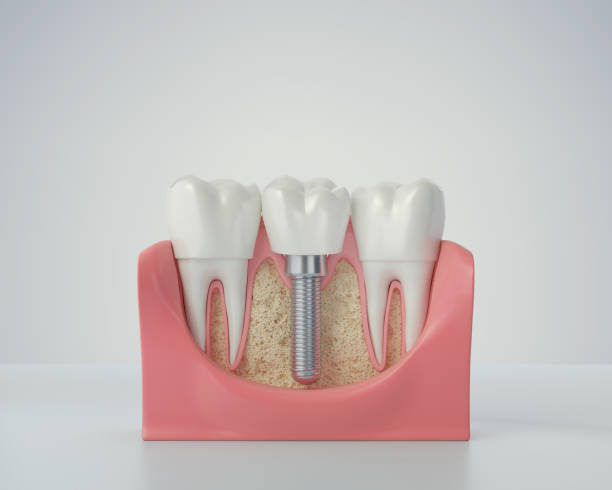
A successful dental implant depends on more than the implant and the jawbone around it. The surrounding gum tissue also affects how the restoration looks, how easily you can clean it, and how a periodontist manages its care.
Periodontal specialists assess gum tissue thickness around dental implants during implant planning. Clinicians call this measurement peri-implant mucosal thickness. Thin gums and thicker gums can respond differently to surgery, restorative work, and healing.
Tissue thickness is one of several details that shape implant care. Research has associated thin tissue with certain bone and soft-tissue changes. Thicker tissue may offer aesthetic and anatomical advantages in some situations. Still, thickness alone does not decide whether an implant succeeds. A thin soft-tissue phenotype does not automatically mean an implant will fail. Not every patient with thin gums needs a graft.
If you are exploring dental implants in Middletown, CT, understanding this tissue can help you prepare for your consultation. It also explains why a periodontist in Middletown, CT, looks closely at the gums, not just the bone.
Key Takeaways
- Peri-implant mucosal thickness describes how thick the soft tissue around an implant is.
- Thin and thick tissue phenotypes may respond differently to surgery and restorative changes.
- Tissue thickness can be relevant to early marginal bone remodeling and implant aesthetics.
- Gum thickness and keratinized tissue width are separate characteristics.
- A periodontist can assess whether soft-tissue augmentation may help in a specific case.
What Is Gum Tissue Thickness Around a Dental Implant?
Gum tissue thickness describes the soft-tissue volume surrounding an implant. It is a separate measurement from gum height, keratinized tissue width, and bone thickness.
What Is Peri-Implant Mucosal Thickness?
Peri-implant mucosa is the soft tissue that surrounds an implant and its restorative parts, such as the abutment. It has an outer layer of epithelial tissue over a core of connective tissue.
Mucosal thickness describes how thick that tissue is, measured from the surface inward toward the implant. Gum height, by contrast, describes how tall the tissue sits above the bone.
What Is a Peri-Implant Soft-Tissue Phenotype?
Phenotype is the term clinicians use for the combined characteristics of the tissues around an implant. Researchers writing in the Journal of Periodontology describe the peri-implant phenotype as having soft-tissue and bone components. The soft-tissue component includes keratinized width, mucosal thickness, and supracrestal tissue height, the height of soft tissue above the bone.
“Thin” and “thick” are descriptive categories, not outcome predictions. Phenotype is also site-specific, so one implant site can differ from another. You may also hear the older term gingival biotype.
How Does Gum Tissue Around an Implant Differ From Gum Tissue Around a Natural Tooth?
A natural tooth connects to the jawbone through the periodontal ligament, a layer of fibers that cushions the root. An implant has no ligament and fuses directly with bone through osseointegration.
Around a tooth, many connective tissue fibers insert into the root surface. Around an implant, they tend to run alongside the implant instead, and the ligament’s blood supply is absent. These differences do not make implant tissue fragile. They simply give it its own anatomy.
Why Do Periodontists Evaluate Tissue Thickness Before Dental Implant Placement?
Tissue phenotype helps a periodontist plan both the surgery and the final restoration, including implant depth and abutment material. It matters most at front teeth and at sites with prior bone loss, recession, or failed treatment.
Thin vs. Thick Gum Tissue Around Dental Implants: What’s the Difference?
The main difference is soft-tissue volume. That difference can affect appearance, gum margin stability, and early bone remodeling. Neither phenotype guarantees implant success or rules it out.
| Characteristic | Thin Peri-Implant Tissue | Thicker Peri-Implant Tissue |
| Tissue volume | Less soft-tissue bulk | Greater soft-tissue bulk |
| Appearance | May allow underlying components to show through | May better mask underlying components |
| Tissue margin changes | May be more susceptible to some changes, depending on other factors | May offer advantages in some situations |
| Marginal bone remodeling | Some studies associate thinner tissue with greater early remodeling | May be associated with more favorable early outcomes in selected contexts |
| Treatment planning | May prompt a discussion of augmentation | Augmentation may be less relevant for thickness alone |
| Implant success | Not determined by thickness alone | Not guaranteed by thickness |
What Does a Thin Gum Tissue Phenotype Look Like?
Thin tissue may look delicate or slightly translucent. Appearance alone is not a reliable measurement, though, so a clinician should assess tissue phenotype.
What Are the Potential Advantages of Thicker Gum Tissue?
Thicker tissue adds volume that may help mask underlying components. It may also support a more stable gum margin and tolerate surgical and restorative changes better. These advantages depend on the site and are not universal.
Does Having Thick Gum Tissue Guarantee Better Implant Health?
No. Thick tissue does not guarantee better implant health. Several other factors continue to shape long-term outcomes.
- Daily plaque control and regular professional care, which limit inflammation
- Implant position, which affects how much bone and tissue surround the implant
- Supporting bone, which holds up the soft tissue above it
- Crown and abutment design, which affects cleaning access
- Periodontal history and health factors such as smoking or diabetes
Why Can Thin Gum Tissue Affect the Long-Term Appearance of Dental Implants?
Thin tissue has less volume to cover the implant’s components and shape the gumline. When this affects appearance, the changes are usually most noticeable around front teeth.
Thin Tissue May Make Implant Components More Visible
Abutments come in titanium or tooth-colored materials such as zirconia. Thin, translucent tissue may let some of that color show through, while thicker tissue blocks more light. Not every thin-tissue implant shows a visible change.
How Soft-Tissue Thickness Influences the Gumline Around Implant Crowns
Tissue volume is one factor that shapes the gumline around an implant crown. It influences how full the tissue looks and how well it matches nearby teeth. Bone support and crown shape matter too.
Why Front-Tooth Dental Implants Require Particular Attention to Tissue Thickness
Front teeth sit in the aesthetic zone, where small differences in color, symmetry, or gumline height are easy to see. Here, a periodontist pays close attention to tissue thickness, smile line, gum symmetry, and crown contour. Back-tooth implants usually carry different priorities.
Can Thin Gums Cause a Gray or Dark Appearance Around an Implant?
They can. Thin tissue over a metal abutment or implant may create a gray tint. Discoloration can also come from recession, exposed components, or inflammation, so it deserves a professional evaluation.
Can Thin Gum Tissue Increase the Risk of Recession Around Dental Implants?
Thin tissue can contribute to recession, but recession usually involves more than tissue thickness. Phenotype describes what the tissue is like. Recession describes whether the gum margin has moved.
How Tissue Phenotype May Influence the Stability of the Gum Margin
Thin tissue has less volume to withstand surgical trauma, inflammation, or crown pressure. That may make the margin more susceptible to change, but thin tissue remains one possible factor, not a direct cause.
Why Implant Position and Facial Bone Support Also Matter
A periodontist considers tissue thickness alongside implant position and the facial bone plate. An implant placed too far toward the lip or cheek may leave little bone to support the gum above it. This is why dental implant positioning and soft-tissue planning work together.
Does Every Patient With Thin Gums Develop Implant Recession?
No. Many patients with thin gums never develop implant recession. Recession is multifactorial, meaning implant position, bone support, inflammation, forceful brushing, and crown contour often work together.
When Changes in the Gumline Should Be Evaluated
A visible metal or gray edge, more crown showing over time, or redness and swelling warrant a visit. Patients who want a full explanation can review the guide to gum recession around dental implants.
How Does Gum Tissue Thickness Relate to Bone Loss Around Dental Implants?
Research has associated thin gum tissue with more early bone remodeling around implants. That association does not make thin tissue a direct cause of progressive bone loss.
What Is Marginal Bone Remodeling After Implant Placement?
After placement, the bone around the top of the implant often adjusts slightly during healing. This marginal or crestal bone remodeling is expected and usually stabilizes. Progressive bone loss is different. It continues over time and is often linked to inflammation, as in peri-implantitis.
Why Thin Peri-Implant Mucosa Has Been Associated With Greater Early Bone Remodeling
In certain clinical settings, studies have linked thinner mucosa with greater early remodeling. A systematic review and meta-analysis found that initial soft-tissue thickness appeared to influence marginal bone loss over short follow-up periods. The authors noted that further studies are needed.
One proposed explanation involves the soft-tissue seal. The body appears to need a certain height of soft tissue above the bone. When that tissue is thin, the bone may remodel to make room.
Many of these studies measured this vertical height, called supracrestal tissue height, rather than horizontal thickness. Older literature described a similar concept as biologic width. The mechanism remains a proposal, and thin mucosa does not directly cause peri-implantitis.
Is Thin Gum Tissue the Same as Having Thin Jawbone?
No. Gum thickness describes soft tissue. Jawbone thickness describes the facial and crestal bone underneath. A patient can have thin gums over thick bone, or the reverse.
Does Thicker Gum Tissue Prevent Peri-Implant Bone Loss?
No. Thicker tissue has been associated with less early remodeling, but it cannot prevent bone loss. Inflammation, implant position, bite forces, and systemic health affect bone levels regardless of tissue thickness.
Why Bone Levels, Implant Position, and Tissue Phenotype Must Be Evaluated Together
Bone supports the soft tissue, the soft tissue helps protect the bone, and implant position influences both. During planning, a periodontist reviews bone on imaging, assesses phenotype, and chooses a position that respects both. The guide to bone loss around dental implants explains the causes and treatment options in more depth.
Is Gum Tissue Thickness the Same as Keratinized Gum Tissue Around Dental Implants?
No. These are two different characteristics of the tissue around an implant, and clinicians measure them in different directions.
What Does Keratinized Mucosa Mean Around a Dental Implant?
Keratinized mucosa is the band of pink tissue around an implant with a tougher surface layer. Clinicians describe how much is present by measuring its width.
How Is Tissue Thickness Different From Keratinized Tissue Width?
Clinicians measure thickness through the tissue, toward the implant. They measure width along the surface, from the gum margin to the movable tissue beyond it. One describes depth. The other describes the extent.
Can a Patient Have Thick Tissue but Limited Keratinized Mucosa?
Yes. Thickness and width do not always rise or fall together. A site may have thick tissue with a narrow firm band, or a wide firm band that is thin.
Why Both Measurements Can Matter for Implant Maintenance
Keratinized width often relates to brushing comfort. Thickness relates more closely to appearance, margin stability, and early remodeling. Together, they shape an individual plan. The article on keratinized gum tissue around implants explains the role of width in more detail.
How Do Periodontists Measure Gum Tissue Thickness Around Dental Implants?
Periodontists evaluate soft tissue through a clinical exam, direct measurement, and in some settings, ultrasound or digital scans.
Clinical Examination of the Peri-Implant Soft Tissue
The clinician notes contour, color, translucency, and how the tissue relates to the crown, neighboring teeth, and implant site. This exam gives useful context but not a precise measurement.
Direct Measurement of Mucosal Thickness
When a precise number matters, a clinician may measure thickness with a fine instrument while the area is numb, often during surgery. This step is not necessary for every patient.
Ultrasound and Other Methods of Evaluating Soft-Tissue Dimensions
Ultrasound devices can estimate soft-tissue dimensions without penetrating the tissue, and some clinicians use them. Comparing digital scans can track volume changes, and specialized CBCT techniques can also help. Availability varies between practices.
Why Imaging and Bone Measurements Do Not Replace Soft-Tissue Assessment
CBCT and dental X-rays show bone clearly but soft tissue far less clearly. Bone measurements cannot describe soft-tissue thickness, so the two assessments complement each other.
Why Tissue Thickness Is Considered Alongside Implant Position and Restorative Planning
The same measurement may lead to different decisions at a front tooth versus a molar. Implant position, bone support, crown design, and patient goals all shape how a periodontist interprets it.
How Much Gum Tissue Thickness Is Needed for a Dental Implant?
There is no single required thickness that guarantees implant success. Research cutoffs compare groups, but they are not clinical rules for every patient.
Why Clinical Studies Sometimes Use Thickness Thresholds
Some studies use approximately 2 mm to separate thin and thick tissue. The 2023 meta-analysis mentioned earlier compared implants placed in tissue at least 2 mm thick with thinner sites. Definitions and methods vary, and a research cutoff is not a surgical requirement.
Why a Single Number Cannot Predict Implant Success
A single measurement cannot account for everything that affects an implant. A periodontist weighs the implant site, tissue phenotype, bone dimensions, restorative design, aesthetic demands, surgical approach, and patient risk factors together.
When a Thin Tissue Phenotype May Be Clinically Acceptable
A periodontist may find existing thin tissue adequate, for example at a back-tooth site with good bone support and cleaning access. There, augmentation may add surgery without a clear benefit.
When Additional Tissue Thickness May Be Beneficial
Added thickness may help front-tooth implants with high aesthetic demands, sites where components show through, or areas lacking tissue volume. The decision depends on the expected benefit at that site.
Can Thin Gum Tissue Be Thickened Before Dental Implant Placement?
Yes, in selected cases. Adding thickness can be part of a planned implant approach.
What Is Soft-Tissue Augmentation for Dental Implants?
Soft-tissue augmentation is a group of periodontal procedures that add volume or improve soft-tissue characteristics. Goals may include better aesthetics, a more stable margin, or easier cleaning. It treats soft tissue only.
How Connective Tissue Grafting Can Increase Tissue Thickness
Connective tissue grafting is one commonly used way to add thickness. The periodontist typically places a small piece of connective tissue, often from the palate, beneath the gum at the implant site. As it heals, it adds volume. Shoreline Periodontics offers soft tissue grafts, and patients considering gum grafting in Middletown, CT, can ask whether this approach fits their plan.
Can Soft-Tissue Augmentation Be Performed Before or During Implant Surgery?
Yes. Augmentation can happen before placement, during the same surgery, or later. Timing depends on site conditions, existing tissue, bone support, and the overall plan.
Are Soft-Tissue Grafts Always Necessary for Thin Gums?
No. Many patients with thin gums receive implants without grafting. A periodontist recommends it only when a site assessment shows a clear expected benefit.
What Are the Limitations of Soft-Tissue Augmentation?
Results vary, and grafted tissue can change during healing. Grafting cannot replace missing bone, move a poorly positioned implant, or fix an overly bulky crown. Bone deficiencies may call for ridge augmentation for dental implants, which rebuilds hard tissue instead.
Can Gum Tissue Be Thickened Around an Existing Dental Implant?
In some cases, yes. Treatment depends on the implant’s condition, the surrounding bone, and the patient’s concern.
Why Soft-Tissue Concerns May Become Noticeable After Implant Restoration
Some concerns appear only after the crown goes in, since crown shape and abutment material affect how the tissue looks. Patients may notice a contour change, a gray shadow, or a visible edge, especially near the front of the mouth.
When Connective Tissue Grafting Around an Existing Implant May Be Considered
A periodontist may consider grafting when the implant is stable and free of active disease. Implant position, tissue condition, inflammation, and the desired outcome guide the decision. Some cases also need crown or abutment changes.
Why Treating Thin Tissue Is Different From Treating Peri-Implantitis
Thin tissue is an anatomical trait. Peri-implantitis is an inflammatory disease that damages the supporting bone. Augmentation does not automatically treat infection, so peri-implantitis treatment typically comes first.
Why Grafting Cannot Correct Every Implant-Related Tissue Problem
Grafting may not fully cover an exposed implant surface, especially without bone support or when the implant sits too far outward. A periodontist may then discuss revising the restoration or replacing the implant.
How Does Gum Tissue Thickness Affect Implant Crown Design?
Tissue thickness can influence crown shape, abutment material, and how the restoration looks at the gumline.
How Implant Abutments Interact With Surrounding Soft Tissue
The abutment passes through the soft tissue, which forms its seal against it. The abutment’s material, shape, and finish influence how the mucosa responds, and these choices may matter more with thin tissue.
Why Crown Emergence Profile Matters for Tissue Health
Emergence profile describes how the crown rises out of the gum. A bulky contour can press on tissue and make cleaning harder, especially when the tissue is thin. A gradual contour may support healthier tissue.
How Tissue Thickness Can Affect the Appearance of Restorative Materials
Because thin tissue is more translucent, material color matters most at the restorative margin, where the crown meets the gum. A tooth-colored abutment may lower the chance of a gray shadow.
Why Periodontal and Restorative Planning Should Work Together
The periodontist and the restoring dentist, who makes the crown, should coordinate early. Together, they can plan implant depth, tissue support, and crown shape as one system.
Does Gum Tissue Thickness Affect Implant Cleaning and Periodontal Maintenance?
Tissue anatomy can affect how easily you can keep an implant clean. It does not determine how well a patient cares for it.
Why Soft-Tissue Anatomy Can Influence Cleaning Access
Tissue contours and crown shape create the spaces a toothbrush and floss must reach. Deep, narrow, or bulky areas are harder to clean, and receded thin tissue may expose surfaces that collect plaque.
Why Thin Gum Tissue Does Not Automatically Mean Poor Oral Hygiene
Phenotype is anatomy, not behavior. Thin tissue says nothing about how carefully someone brushes. It may simply benefit from closer monitoring.
How Periodontal Maintenance Helps Monitor Tissue Changes
Periodontal maintenance visits track inflammation, bleeding, gum margin position, probing measurements, and bone levels. Patients seeking periodontal maintenance in Middletown, CT, can ask how often implant checkups suit them.
When Changes in Tissue Appearance Should Prompt an Examination
Recession, bleeding, swelling, discomfort, or a newly visible component are all reasons to schedule an exam. Early evaluation often keeps treatment options simpler.
How Does Tissue Thickness Matter for Full-Arch Dental Implants?
In full-arch treatment, soft tissue helps shape how the entire bridge fits, looks, and cleans.
Soft-Tissue Volume Is Part of Full-Arch Implant Planning
For full arch dental implants in Middletown, CT, tissue contours help shape the bridge design and how natural the gumline looks. Many full-arch bridges include gum-colored material that replaces lost tissue volume.
Why Cleaning Access Matters Around Full-Arch Implant Bridges
Full-arch bridges rest close to the gums, so their underside should leave room for cleaning tools and water flossers.
Does Every Full-Arch Implant Patient Need Soft-Tissue Grafting?
No. Many full-arch patients never need soft-tissue grafting. The decision depends on anatomy, restorative design, and treatment goals.
When Should You See a Periodontist About Thin Gum Tissue Around an Implant?
A periodontal evaluation can help both before and after implant treatment.
Before Dental Implant Placement if You Have Thin or Receding Gums
If a dentist has mentioned thin or receding gums, an assessment before surgery is a sensible first step. It lets a periodontal specialist plan around tissue, bone, and implant position together.
When an Implant Crown Looks Dark Through the Gum Tissue
A dark shadow at the gumline can be noticeable when you smile, and it can have several causes. Identifying the right one matters because each may need a different approach.
When the Gumline Around an Implant Appears to Be Changing
A gumline that seems to be moving or changing shape warrants evaluation, since early changes are often easier to manage.
When Thin Tissue Is Accompanied by Bleeding, Swelling, or Discomfort
Bleeding, swelling, or discomfort may signal inflammation or another condition, not thin tissue itself. These symptoms need a proper diagnosis.
When Considering Gum Grafting Around an Existing Implant
A periodontist can tell you whether grafting is likely to address your concern. Sometimes the real cause lies in the bone, implant position, or crown instead.
Frequently Asked Questions About Gum Tissue Thickness and Dental Implants
Can you get dental implants if you have thin gums?
Yes, in many cases. Thin gums do not automatically rule out implant treatment. A periodontist evaluates tissue thickness along with bone support, implant position, and aesthetic goals. Some patients proceed without extra procedures. Others may benefit from soft-tissue augmentation before or during implant placement.
Are thick gums better for dental implants?
Thick gums may offer some advantages. Thicker tissue can help mask underlying components and may support a more stable gum margin. Research has also associated it with less early bone remodeling. Still, thick tissue does not guarantee success, and daily care remains just as important.
Can thin gum tissue cause dental implant failure?
Not on its own. Thin tissue alone does not establish a risk of implant failure. Failure usually involves other factors, such as infection, poor bone integration, or implant position. Thin tissue may influence appearance, margin stability, and early remodeling. A periodontist considers it one part of the overall picture.
Does thin gum tissue cause bone loss around dental implants?
Not directly. Research has associated thinner mucosa with greater early marginal bone remodeling in short-term studies. That association does not make thin tissue a cause of progressive bone loss. Inflammation, implant position, bite forces, and systemic health also affect bone levels. Each case needs its own evaluation.
Can thin gums cause recession around an implant?
Thin gums can be one contributing factor. Thin tissue has less volume, which may make the gum margin more susceptible to change. Recession usually involves several factors together, including implant position, facial bone support, inflammation, and crown contour. Many patients with thin gums never develop a recession.
What is a thin peri-implant phenotype?
A thin peri-implant phenotype describes soft tissue around an implant that has less thickness and volume. It may look delicate or slightly translucent. The term is a descriptive category that helps with planning. It does not predict whether an implant will succeed or develop problems.
How thick should gums be around a dental implant?
There is no universal ideal measurement. Some studies use about 2 mm to separate thin and thick tissue, but that cutoff is a research tool rather than a requirement. The right amount depends on the implant site, aesthetic demands, bone support, and restorative design.
Is gum thickness the same as keratinized gum tissue?
No. Gum thickness measures how deep the tissue is from the surface inward. Keratinized tissue width measures how far the firm band of tissue extends along the surface. A site can have plenty of one and little of the other, so periodontists evaluate them separately.
Can a connective tissue graft make gums thicker?
Yes, in selected cases. A connective tissue graft adds soft-tissue volume beneath the gum, which can increase thickness at an implant site. Results vary with healing, blood supply, and site conditions. Whether it suits your situation depends on an evaluation of the specific site.
Can gum tissue be thickened after an implant is already placed?
Sometimes. A periodontist can treat some existing implant sites with soft-tissue grafting, especially when the implant is stable and free of active disease. Implant position, bone support, and crown design affect what is possible. Some cases also need restorative changes for the best result.
Does everyone with thin gums need a gum graft before implants?
No. Many patients with thin gums receive dental implants without a gum graft. A periodontist recommends augmentation only when the expected benefit justifies the added procedure for that site. Examples of such benefits include better aesthetics or a more stable gum margin.
Why does the gum around my implant look gray?
A gray look often comes from thin, translucent tissue over a metal abutment or implant. Restorative materials can contribute as well. Recession, exposed components, or inflammation can cause similar changes. A periodontist can identify the actual cause and explain which options may improve the appearance.
Can soft-tissue grafting prevent implant recession?
Grafting may lower recession risk in selected cases, but it cannot guarantee prevention. Grafted tissue can change over time. Long-term stability also depends on implant position, bone support, plaque control, and regular maintenance. Your periodontist can set realistic expectations about what grafting can achieve.
Should I see a periodontist before dental implants if I have thin gums?
Yes, it is often a good idea. A periodontist evaluates tissue thickness, bone support, and implant position together before surgery. For patients considering implants with Shoreline Periodontics in Middletown, this assessment helps shape a plan that accounts for both function and appearance.
Dental Implant Soft-Tissue Evaluation in Middletown, CT
The thickness and condition of the gum tissue around a dental implant can influence treatment planning, appearance, and long-term maintenance. Thin gums, visible implant components, changes in your gumline, or concerns about an existing implant are all good reasons for a periodontal evaluation. An evaluation can help identify the factors involved.
At Shoreline Periodontics, patients can meet with a periodontist in Middletown, CT, to discuss their dental implant and gum health concerns. The visit can clarify whether additional soft-tissue assessment or treatment may be appropriate.
Concerned about thin gums or the tissue around an implant? Schedule a consultation with Shoreline Periodontics about implant planning or the gum tissue around an existing implant. The practice also has locations in New London, CT, and Westerly, RI.
