
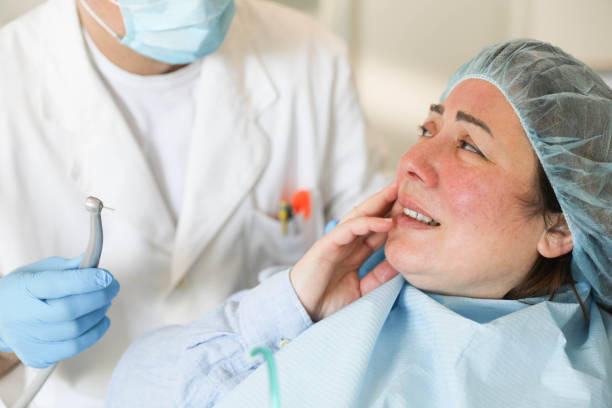
Temporary numbness after dental implant surgery is expected while the local anesthetic is still working. Sensation that stays altered after the anesthetic should have worn off is different. Numbness, tingling, or burning in the lip, chin, tongue, or gums may point to nerve irritation or a dental implant nerve injury. Contact your implant surgeon promptly rather than assuming the feeling will fade on its own.
Some patients notice lower lip numbness on one side. Others feel tingling after dental implants, a prickling chin, or a tongue that feels thick. The location matters because different sensory nerves supply different areas of the face and mouth.
Many postoperative sensory changes improve over time, but symptoms alone cannot reveal the cause. A periodontist or other appropriately trained clinician examines the implant site, your symptoms, and nearby anatomy to decide on next steps. Shoreline Periodontics provides this evaluation for patients receiving dental implants in Middletown, CT, serving communities across Middlesex County.
Key Takeaways
- Temporary numbness from local anesthesia is different from a nerve injury.
- Lower lip and chin numbness after lower-jaw implant surgery can involve the inferior alveolar or mental nerve.
- Tongue numbness or altered taste can involve the lingual nerve or another cause that needs assessment.
- Tingling, burning, reduced sensation, and complete numbness are different symptom patterns.
- New or persistent abnormal sensation after the anesthetic wears off warrants prompt contact with your treating clinician.
- Recovery depends on the cause and severity, and not every nerve disturbance is permanent.
Is Numbness Normal After Dental Implant Surgery?
Yes, while the local anesthetic is active. Numbness can occur even when surgery goes exactly as planned, because the anesthetic and normal tissue changes both affect sensation. New or persistent changes after the anesthetic wears off deserve prompt assessment.
Why Local Anesthesia Causes Temporary Numbness After Implant Placement
Local anesthetics stop sensory nerves from sending pain signals during surgery. A nerve block in the lower jaw can numb a wide area at once. Depending on the technique and site, your lip, cheek, tongue, gums, or jaw may feel numb. This is the medication working as intended.
How Long Should Numbness From Dental Anesthesia Last?
Duration varies with the anesthetic type, dose, injection site, and your individual response. Effects often fade over several hours, but no single deadline fits every patient. In normal recovery, feeling returns gradually as the medication wears off.
Numbness or burning beyond the window in your postoperative instructions breaks that pattern. It does not prove nerve damage, but it does mean you should call.
What Do Tingling, Pins and Needles, and Burning After Dental Implants Mean?
These words describe different sensory experiences, and clinicians use a specific term for each. Each term describes what you feel, not the cause or severity of a nerve problem.
| Term | What it feels like | What it means |
| Paresthesia | Tingling, prickling, or pins and needles | An abnormal sensation that is not necessarily painful |
| Hypoesthesia | Reduced feeling, such as one side of the lower lip feeling muted | Decreased sensitivity to touch or other stimuli |
| Anesthesia | Complete loss of feeling | Expected during surgery, but needs investigation if it persists after the medication clears |
| Dysesthesia | Burning, electric shocks, or an odd ache | An unpleasant abnormal sensation, sometimes present even when tissue looks normal |
| Allodynia | Pain from light touch, such as a napkin brushing the lip | Pain from a normally harmless stimulus, which not every nerve injury causes |
Does Tingling Mean a Damaged Nerve Is Healing?
Not necessarily. Tingling can appear as sensation returns. It can also accompany ongoing nerve irritation or injury. Only your history and a clinical examination can show which pattern applies.
Which Nerves Can Be Affected During Dental Implant Surgery?
Several sensory branches of the trigeminal nerve run near implant sites. Each supplies a different area. That is why the location of your symptoms matters.
The Inferior Alveolar Nerve: Sensation in the Lower Jaw, Teeth, and Related Tissues
The inferior alveolar nerve runs through the mandibular canal, a tunnel inside the lower jaw. It supplies feeling to the lower teeth and nearby gums. Implants in the back of the lower jaw are often planned close to this canal. Compression or injury along the nerve can change sensation farther along its path.
The Mental Nerve: Why the Lower Lip and Chin Can Become Numb
Near the premolars, the inferior alveolar nerve exits the jaw through a small opening called the mental foramen. From there, it continues as the mental nerve and supplies the lower lip and chin. The National Library of Medicine describes the inferior alveolar nerve’s path through the lower jaw in more detail. This path explains why surgery inside the jaw can cause numbness on the skin outside it.
The Lingual Nerve: Tingling or Numbness Along the Tongue
The lingual nerve supplies general feeling to the front part of the tongue and the inner gums. Involvement of this nerve can cause tongue numbness or altered sensation. Some injuries also affect taste on the same side. Tongue numbness has several possible causes, including the anesthetic injection, so it does not prove that an implant touched the nerve.
What About Numbness After Upper-Jaw Dental Implant Surgery?
The upper jaw has its own sensory pathways, separate from the inferior alveolar nerve. Numbness after upper-jaw surgery should not be attributed to the mandibular canal. New or persistent changes there still warrant assessment. Your clinician will check the surgical site, the anesthetic used, and other possible causes.
Why the Location of Numbness Helps Identify the Possible Nerve Involved
The table below shows how symptom location guides an evaluation.
| Reported symptom | Relevant anatomy to evaluate | Important limitation |
| Lower lip numbness | Inferior alveolar and mental nerve pathways | Does not alone prove implant contact |
| Chin numbness | Mental nerve territory | Can have different causes |
| Lower teeth or gum altered sensation | Inferior alveolar nerve distribution | Requires clinical localization |
| Tongue numbness | Lingual nerve and anesthetic-related factors | Not necessarily caused by implant placement |
| Altered taste | Lingual nerve-associated taste pathways or other causes | Needs specific evaluation |
| Upper lip or upper-jaw sensory changes | Maxillary sensory pathways | Requires a different anatomical assessment |
Why Can Dental Implants Cause Numbness or Nerve Irritation?
Several mechanisms can affect a nerve during or after implant surgery. Some relate to the implant itself. Others relate to the anesthetic injection, the healing process, or procedures done at the same visit, such as an extraction or bone grafting.
Direct or Thermal Trauma During Implant Site Preparation
In an unfavorable situation, drilling near a nerve may injure it directly. Excessive heat during drilling can also affect surrounding bone and nerve tissue, which is why surgeons use cooling irrigation and controlled technique. Neither is a common outcome of appropriately planned surgery. The final implant position does not always show everything that happened during preparation.
Pressure From an Implant Positioned Too Close to a Nerve
An implant placed very close to a nerve can press on it. That pressure interferes with how the nerve carries signals. Because compression may need timely management, clinicians work to separate it from other causes quickly.
Postoperative Swelling, Bleeding, or Tissue Pressure Near a Nerve
Swelling, a collection of blood called a hematoma, or inflammation can press on nearby nerves. The inferior alveolar nerve sits inside a bony canal, so swelling there has little room to expand. Persistent numbness should not be assumed to be swelling alone.
Temporary Nerve Irritation Associated With Dental Anesthetic Injection
Occasionally, the injection or nerve block itself irritates a nerve. This differs from the expected numbness the medication produces. In these cases, the altered sensation relates to the injection rather than the implant.
Why an Implant Can Be Stable Even When a Sensory Complication Exists
Osseointegration and nerve function are separate biological processes. Osseointegration is the bond between the implant and the jawbone. An implant can integrate fully while a nearby nerve remains irritated. Numbness is also different from the signs of dental implant failure, such as movement or bone loss.
How Long Can Tingling or Numbness Last After Dental Implant Surgery?
It depends on the cause. Numbness from the local anesthetic is expected and usually fades over several hours. If sensation is still altered after the anesthetic should have worn off, notify your treating clinician promptly. Nerve-related changes follow a less predictable course that can last weeks, months, or longer.
Why There Is No Universal Recovery Timeline for Dental Implant Numbness
Recovery depends on the nerve involved, the mechanism, the severity, the timing, and the treatment. Bone also follows its own schedule, which our guide to dental implant healing and recovery explains. A nerve’s recovery timeline has no bearing on when you should call. Contact your surgeon as soon as sensation stays altered.
When Should Numbness After Dental Implant Surgery Be Considered Urgent?
Any unexplained change in sensation after the anesthetic should have worn off warrants a prompt call to your implant surgeon. Contact the office if you notice any of these signs.
- Lip, chin, or tongue numbness that continues past the expected anesthetic window
- Dense or complete loss of feeling, especially on one side of the lower lip and chin
- Burning pain, electric-shock sensations, or painful tingling
- Numbness that spreads, intensifies, or returns after first improving
Waiting can narrow treatment options in some cases. Burning or electric sensations are not ordinary postoperative soreness.
Why the First 24–48 Hours Can Matter if Nerve Compression Is Suspected
Clinical literature emphasizes early assessment when an implant may be compressing a nerve. A systematic review of implant-related nerve injuries highlights the value of early diagnosis and treatment. In selected cases, a clinician may order prompt imaging within the first day or two. They then decide whether to relieve pressure or remove the implant. This window describes professional decision-making, not a deadline to wait for. Call as soon as you notice concerning symptoms.
What if You Cannot Reach Your Implant Surgeon?
If concerning symptoms persist and your implant practice is unavailable, contact an urgent dental or oral surgery service. Call 911 for sudden facial drooping, arm weakness, or difficulty speaking, which can signal a stroke. Seek emergency care for trouble breathing or swallowing, or for uncontrolled bleeding. The same applies to rapidly spreading facial swelling with fever or feeling very unwell.
Still numb after the anesthetic should have worn off? Call your implant surgeon.
If your lip, chin, tongue, or another area stays unexpectedly numb, contact your implant surgeon promptly. The same applies if unusual sensations develop. Do not wait several days for a routine follow-up to report possible nerve symptoms.
How Does a Periodontist Evaluate Numbness or Tingling After Dental Implants?
Evaluation combines your symptom history, sensory testing, and a review of the implant’s position.
Reviewing When the Numbness Started and How It Has Changed
Your clinician will want a clear timeline. Be ready to share these details.
- The date and time of your implant surgery
- Where the implant was placed
- Whether numbness started right away or later
- When the anesthetic was expected to wear off
- Whether sensation is improving, unchanged, or worsening
- Any burning, pain, or change in taste
Onset and progression help separate anesthetic effects, swelling, and possible nerve injury.
Mapping and Sensory Testing
The clinician may outline and record the exact boundaries of the altered area and compare it with the unaffected side. Testing may involve gentle touch, light pressure, or other controlled stimuli. Specialized tests, such as two-point discrimination, measure how finely you can sense touch. Repeating these tests at follow-up visits tracks progress. Do not attempt sharp-object testing at home.
Reviewing Surgical Records and Imaging
The clinician reviews the implant’s length and position, the operative notes, and the original planning images. Dental X-rays show how the implant relates to surrounding anatomy. A CBCT scan, a type of 3D imaging, may add detail when clinical findings call for it. Imaging shows structure, but it cannot measure nerve function or confirm how severe an injury is.
When a Referral to an Oral and Maxillofacial Surgeon or Nerve Specialist Is Needed
Serious, persistent, or concerning changes may need assessment by an oral and maxillofacial surgeon or a nerve injury specialist. The timing and type of referral depend on the diagnosis and its urgency.
What Is the Difference Between Nerve Irritation, Compression, and Permanent Injury?
Nerve injuries range from temporary disturbances to structural damage. Clinicians use these categories to understand the likely course of recovery.
| Injury type | What happens | Typical outlook |
| Neurapraxia (temporary conduction disturbance) | Nerve signaling is disrupted, but the nerve is not broken | Often reversible as the nerve regains function |
| Nerve compression | Pressure reduces the nerve’s ability to carry signals | Relieving a confirmed source of pressure may be time-sensitive |
| Axonotmesis (nerve fiber injury) | Nerve fibers are damaged, but the outer structure remains | Longer and less predictable recovery |
| Neurotmesis (complete disruption) | The nerve is fully disrupted | Typically requires specialist management |
Symptoms alone cannot reveal which type applies. Tingling does not guarantee a mild injury, and complete numbness does not reveal the exact mechanism. Examination and follow-up testing are needed to classify an injury.
Can Numbness After Dental Implant Surgery Be Treated?
Treatment depends on the diagnosis. Numbness is a symptom, so clinicians first distinguish lingering anesthesia, nerve irritation, compression, direct injury, and other causes.
Monitoring a Mild Sensory Disturbance When Appropriate
After an examination, some mild cases are monitored when serious injury or ongoing compression is not suspected. A clinician-directed observation plan includes scheduled checks. That is very different from waiting at home without an assessment.
What Happens if an Implant Is Compressing a Nerve?
Confirmed or strongly suspected implant-related compression may require urgent professional intervention. Depending on the situation, options may include relieving pressure, adjusting the implant’s position, or removing it. Removal is not automatically necessary for every patient with numbness. This decision follows different reasoning than deciding whether a failing implant can be saved when bone or gum problems are involved.
Medication and Specialist Care
A clinician may consider medication for inflammation or nerve-related pain, depending on the diagnosis. Medication cannot reverse every structural injury. Significant or persistent deficits may need care from a specialist experienced in trigeminal nerve injuries. That care may be nonsurgical or may involve a surgical evaluation.
Timely evaluation can preserve treatment options, but no intervention guarantees a full return of sensation.
Can Numbness After a Dental Implant Become Permanent?
Some nerve-related sensory changes resolve, while others can be prolonged or permanent. Milder disturbances may improve gradually over weeks or months as nerve function returns. More significant injuries and ongoing compression can leave lasting numbness, discomfort, or altered responses to touch or temperature.
Does Early Improvement Mean the Nerve Will Fully Recover?
Improvement is an encouraging sign. It does not guarantee complete recovery, and progress can level off. Keep your follow-up visits so your clinician can track your progress.
What if Numbness Continues for Weeks or Months?
If your symptoms continue and you have no diagnosis yet, seek further evaluation. Patients who missed an early assessment can still benefit from specialist care. Do not assume nothing can be done.
How Can Altered Sensation Affect Daily Activities?
Altered sensation can affect everyday life in several ways.
- Eating and drinking comfortably
- Noticing food or liquid on the lip
- Accidentally biting numb lip, cheek, or tongue tissue
- Brushing and cleaning the affected area
- Speaking comfortably
- Sensitivity to touch
- Overall quality of life
Are Lower-Jaw Dental Implants More Likely to Cause Lip or Chin Numbness?
Lip and chin numbness is mainly associated with lower-jaw sites, because the inferior alveolar and mental nerves both run through the lower jaw. The bone height above the mandibular canal also limits how long an implant can be.
Why Lower Molar and Premolar Implant Sites Require Anatomical Assessment
Molar sites sit above the mandibular canal. Premolar sites lie near the mental foramen. Proximity to these structures shapes implant placement and positioning at each site, especially when bone height is limited.
Does Every Lower-Jaw Dental Implant Carry the Same Nerve Risk?
No. Risk depends on your anatomy, the procedure, the implant’s position, and other factors. Published injury estimates vary widely, so no single figure applies to every patient or procedure.
How Do CBCT Scans Help Protect Nerves During Dental Implant Planning?
CBCT gives a three-dimensional view of the jaw before surgery. It helps the surgeon plan around nerves.
What CBCT Shows Before Implant Surgery
CBCT imaging shows the path of the inferior alveolar canal through the bone. It also locates the mental foramen, whose position varies between people and can shift with bone loss. These measurements help the surgeon choose an implant length and position that keeps a margin from key structures.
How Digital Implant Planning Supports Controlled Placement
Virtual planning lets the surgeon map the implant before surgery begins. Guided dental implant surgery can then transfer that plan to the mouth. Clinical judgment still guides every step, and no technique eliminates nerve injury risk completely.
Does Numbness After Teeth-in-a-Day or Full-Arch Implant Surgery Mean Something Went Wrong?
Not necessarily. Full-arch treatment places several implants in one arch, and each position must be planned around the available bone and nearby structures. Patients considering full arch dental implants in Middletown, CT, benefit from that detailed planning. A secure new arch also does not rule out a sensory problem, since implant integration and nerve function are separate outcomes.
Can Lower-Jaw Full-Arch Implants Affect Sensory Nerves?
Yes. The mandibular canal and mental foramen remain relevant whenever several implants are placed in the lower jaw. The number of implants alone does not determine risk.
Is Numbness Immediately After Teeth-in-a-Day Treatment Always a Complication?
No. Numbness right after Teeth-in-a-Day treatment usually reflects the local anesthetic. The concern is sensation that stays altered after the anesthetic should have worn off. Report that promptly, just as you would after a single implant.
What Should You Do at Home if Your Lip, Chin, or Tongue Feels Numb After Implant Surgery?
Home care supports recovery but does not replace an evaluation. Start by calling your treating clinician if sensation stays unexpectedly altered. Then follow these steps.
- Protect numb areas. Chew carefully, and avoid very hot foods and drinks until normal feeling returns.
- Follow your postoperative instructions. Wound care, medications, and hygiene steps vary by procedure.
- Keep a symptom record. Note when symptoms started, the affected area, and whether they are improving. Do not test the area with sharp objects.
- Leave the implant alone. Do not press on, wiggle, or try to adjust it. Suspected pressure on a nerve needs professional treatment.
How Can Patients Reduce the Risk of Nerve Problems Before Dental Implant Surgery?
Good planning and careful surgery reduce risk, though no surgical procedure is risk-free. These questions can help you prepare.
- Have my bone and nearby nerves been evaluated with imaging?
- How did my anatomy shape the planned implant size and position?
- Is my implant site near a sensory nerve, and what are the related risks?
- Does my surgeon know about any numbness or nerve problems I already have?
- Which symptoms should I report after surgery, and how do I reach the office after hours?
Frequently Asked Questions About Numbness and Tingling After Dental Implants
Is it normal to have a numb lip after dental implant surgery?
Yes, while the local anesthetic is active. A numb lip is expected for several hours after many lower-jaw procedures. If your lip stays numb after the anesthetic should have worn off, contact your implant surgeon promptly. The same applies if tingling or burning develops.
How long should numbness last after a dental implant?
It varies. Anesthetic numbness often fades over several hours, depending on the medication, dose, injection site, and your individual response. Your surgeon’s instructions should describe the expected window. Numbness that continues beyond it needs prompt evaluation rather than waiting for a routine follow-up.
Why is my chin still numb after a lower dental implant?
Chin numbness after a lower implant can involve the inferior alveolar nerve or its branch, the mental nerve. Swelling, anesthetic effects, or nerve irritation can all play a role. Only an examination can identify the cause, so call your surgeon promptly.
Can a dental implant touch or compress a nerve?
Yes, this can happen with some complications. An implant placed very close to a nerve may press on it and change sensation. Suspected compression needs prompt professional assessment because management may be time-sensitive. A clinical exam and imaging help the clinician confirm or rule it out.
Why does my tongue feel numb after dental implant surgery?
Tongue numbness may involve the lingual nerve, which supplies feeling to the front of the tongue. It can also result from the anesthetic injection or other causes. Numbness does not prove that the implant touched the nerve. Persistent tongue numbness or altered taste should be evaluated promptly.
Is tingling after dental implant surgery a sign of healing?
Not always. Tingling can occur as sensation returns, but it can also signal ongoing nerve irritation. The feeling itself does not show which is happening. Report new or persistent tingling to your surgeon so it can be interpreted alongside an examination.
Is nerve damage after dental implants permanent?
Not always. Many sensory disturbances improve over time, especially milder ones. Some injuries do cause lasting numbness, tingling, or discomfort. The outlook depends on the nerve involved, the type of injury, and how quickly the cause is identified and managed.
Can numbness occur even if the implant is stable?
Yes. Implant stability reflects the bond between the implant and the bone, while sensation depends on nearby nerves. An implant can feel completely secure while a nearby nerve remains irritated. A stable implant does not rule out a sensory complication.
Does numbness after implant surgery always mean the implant must be removed?
No. Removal is considered only in selected situations after evaluation, such as confirmed or strongly suspected compression. Many causes of numbness, including anesthetic effects and swelling, do not involve the implant’s position. Your clinician recommends treatment based on the diagnosis.
Can CBCT show whether a dental implant is too close to a nerve?
Yes, CBCT can show the implant’s position relative to the mandibular canal in three dimensions. It cannot measure how well the nerve is working or how severe an injury is. Clinicians pair imaging with sensory testing for a complete picture.
What should I do if numbness begins several days after dental implant surgery?
Contact your treating clinician promptly. New or worsening altered sensation days after surgery may relate to swelling or other changes, and it still deserves assessment. Describe when it began and how it has changed so your clinician can decide on next steps.
Should I see a periodontist or oral surgeon for dental implant numbness?
Start by contacting the surgeon who placed your implant, whether that is a periodontist or an oral surgeon. Depending on the findings, an oral and maxillofacial surgeon or nerve injury specialist may also be needed for further assessment or treatment.
Where can I seek an evaluation for concerns after dental implants in Middlesex County, CT?
Shoreline Periodontics evaluates postoperative implant concerns for patients across Middlesex County at our Middletown office on Saybrook Road. Our periodontists can examine the implant site and review imaging. When findings call for it, they coordinate referral to a nerve injury specialist.
Dental Implant Numbness or Nerve Concerns in Middlesex County, CT
Shoreline Periodontics & Dental Implants serves patients throughout Middlesex County from our office at 520 Saybrook Road, Suite 200, in Middletown.
Noticing symptoms after recent implant surgery? Call the office directly rather than requesting a routine appointment online. Altered sensation after the anesthetic should have worn off deserves prompt attention.
Planning implant treatment or want a second opinion? Schedule a consultation with a periodontist in Middletown, CT to review your treatment plan.
Concerned about numbness, tingling, or another change after implant surgery? Contact Shoreline Periodontics in Middletown to understand your options. We also have offices in New London, CT, and Westerly, RI.
